







Global Guardians

Knowledge is the first step towards preparedness.
Classes VII & VIII
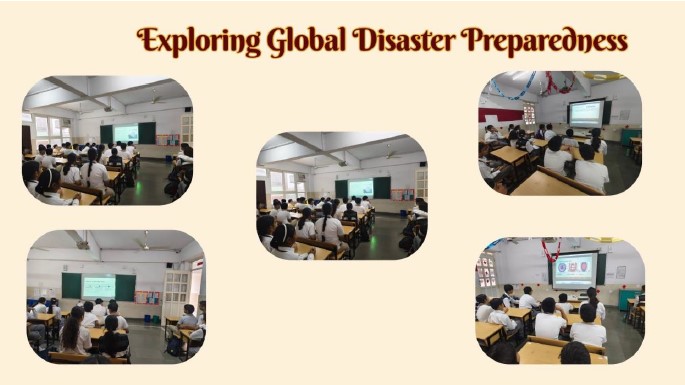
Activity: Global Civil Defence Exploration
Students began the initiative by exploring the concept of civil defence and disaster preparedness through engaging research and interactive PowerPoint presentations. They studied the civil defence systems of India, Japan, and South Korea, gaining insights into how different nations prepare for emergencies and safeguard their communities. Through their research, students learned about disaster management strategies, early warning systems, rescue operations, and the crucial role played by trained volunteers and first responders during natural and man-made disasters.
Students shared their findings with classmates and partner schools, creating meaningful discussions about the importance of preparedness, teamwork, and quick response during crises. The activity broadened their global perspective and helped them realise that effective disaster management requires knowledge, planning, and cooperation among nations. Through this learning experience, students developed a deeper sense of responsibility and understood how awareness and preparedness can help protect lives and communities.
Design is intelligence made visible.
Classes VII &VIII
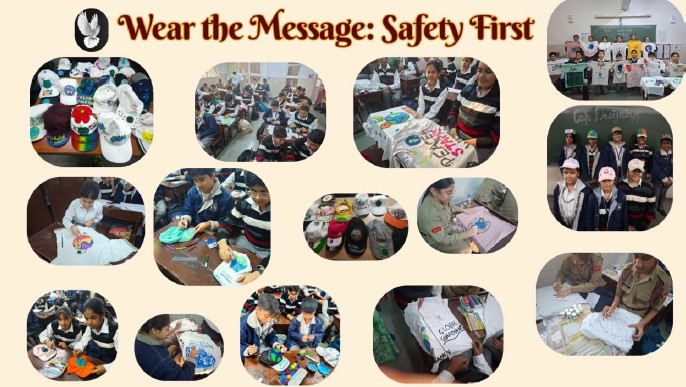
Activity: Campaign T-Shirt and Cap Design for Safety Awareness
Students expressed their creativity and social awareness by designing campaign T-shirts and caps carrying impactful slogans and symbols related to disaster safety, peace, and global unity. Drawing inspiration from their research on disaster preparedness in India, Japan, and South Korea, they created designs that reflected solidarity, resilience, and responsibility during emergencies. Through the thoughtful use of colours, symbols, and meaningful messages, students explored how visual communication can effectively convey powerful ideas and encourage communities to stay alert and prepared.
The activity provided a platform for students to combine creativity with social responsibility. As they designed their campaign materials, they realised that art and design can play a significant role in spreading awareness and influencing positive action. The experience not only strengthened their artistic skills but also helped them understand how creative expression can promote a culture of preparedness, cooperation, and safety within society.
A powerful message can inspire a thousand actions.
Classes VII &VIII
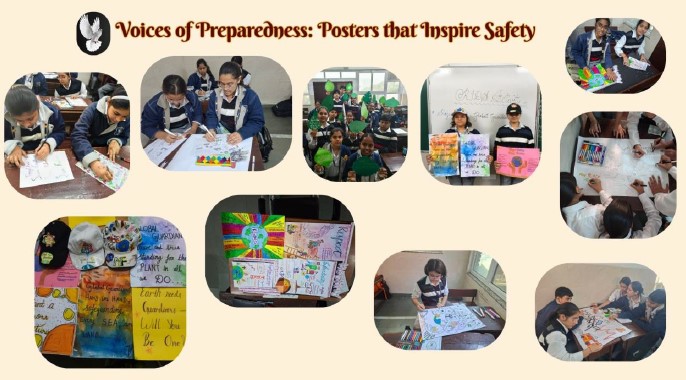
Activity: Poster and Slogan Campaign on Disaster Preparedness
Students actively participated in a Poster and Slogan Campaign that highlighted the themes of disaster safety, global cooperation, and humanitarian responsibility. Through colourful illustrations and impactful slogans, they creatively expressed ideas about preparedness, compassion, and unity during times of crisis. The posters reflected students’ understanding of how communities can reduce risks and respond effectively when faced with emergencies.
The activity encouraged students to think critically about the importance of awareness and collective action in disaster management. Selected posters were also shared with partner schools in Japan and South Korea, creating an opportunity for intercultural exchange and dialogue. Through this experience, students realised that disaster preparedness is not limited to one country but is a shared global responsibility that requires cooperation, knowledge, and mutual support among nations.
Discipline and courage build strong communities.
Classes VII &VIII
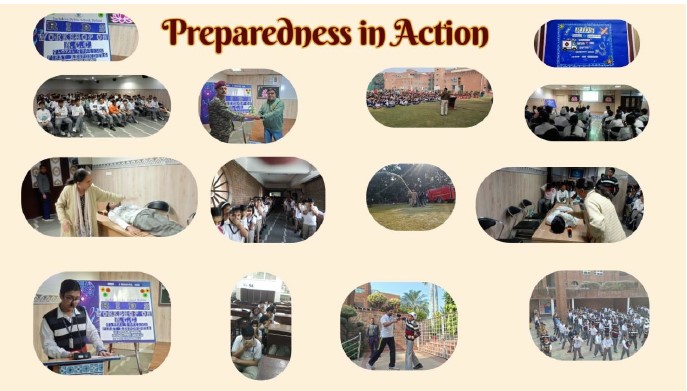
Activity: NCC and Disaster Management Interaction
An international collaborative activity on Civil Defence, giving students a valuable opportunity to explore how different nations prepare for and respond to emergencies. Through insightful sessions with NCC Associate Officer Second Officer Mr. Jitin Sharma (7 Delhi Battalion), Third Officer Ms. Shweta Sharma (2 Delhi Battalion), and Hawaldar Avinash (7 Delhi Battalion), along with defence experts and disaster management authorities, students gained an understanding of the real-life challenges faced by first responders and the functioning of civil response systems during crises. The interaction highlighted how discipline, teamwork, and presence of mind play a vital role in safeguarding communities.
Students also engaged in meaningful discussions on global disaster preparedness, comparing India’s civil defence systems with Japan’s earthquake-ready infrastructure and South Korea’s community-driven preparedness drills. This comparative learning helped them recognise that safety is a shared global responsibility and that communities become more resilient when nations learn from each other’s experiences and strategies.
During the programme, students were introduced to essential emergency response skills such as first aid, CPR, and safe evacuation procedures. These activities not only enhanced their awareness and preparedness but also encouraged empathy towards communities affected by disasters. The experience helped students understand that preparedness, responsibility, and international cooperation form the foundation of effective civil defence and community safety.
Unity is strength when there is teamwork and collaboration.
Classes VII &VIII
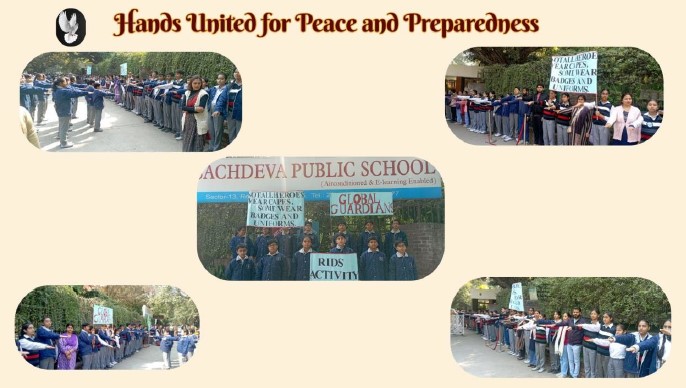
Activity: Human Chain for Peace and Preparedness
Students came together to form a powerful Human Chain for Peace and Preparedness, symbolising unity, solidarity, and collective responsibility towards safety and harmony. Standing hand in hand, they conveyed a strong message that awareness and cooperation are essential for communities to face challenges during disasters. The activity reflected the spirit of collective action and highlighted how individuals can contribute to building safer and more resilient communities.
The initiative also drew the attention of parents and passers-by, many of whom joined the human chain and appreciated the thoughtful effort undertaken by the students. Their participation and encouragement added to the enthusiasm of the moment and reinforced the message that preparedness and community support go hand in hand. The experience fostered a sense of belonging and teamwork among students while helping them realise that when people unite with empathy and responsibility, communities become stronger and better prepared to face crises.
Planting a tree is planting hope for the future.
Classes VII & VIII
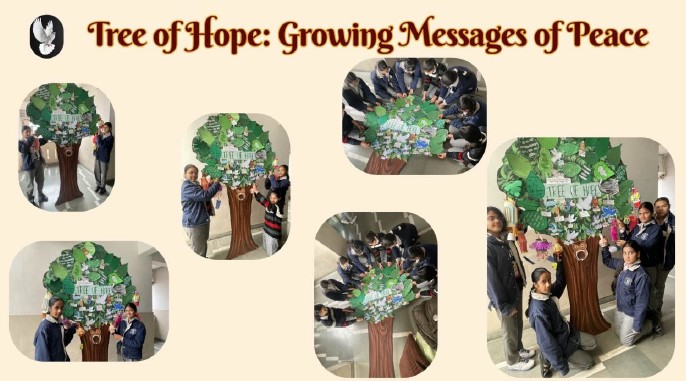
Activity: Tree of Hope – Spreading the Message of Peace
Students participated in a meaningful activity titled Tree of Hope, where they came together to create a symbolic display representing peace, unity, and optimism for the future. Through colourful leaves, messages, and creative artwork, students expressed their thoughts about harmony, compassion, and the importance of living together in a peaceful world. Each leaf carried a message of kindness, safety, or cooperation, reflecting the students’ understanding that small positive actions can contribute to building stronger and more caring communities.
The activity encouraged reflection on the values of empathy, responsibility, and global harmony. As the Tree of Hope gradually filled with messages, it became a powerful visual reminder that when individuals contribute their ideas and goodwill, they can collectively inspire a brighter and more peaceful future. Students took pride in seeing their messages become part of a larger symbol of unity and hope.
The best way to spread a message is to perform it.
Classes VII &VIII
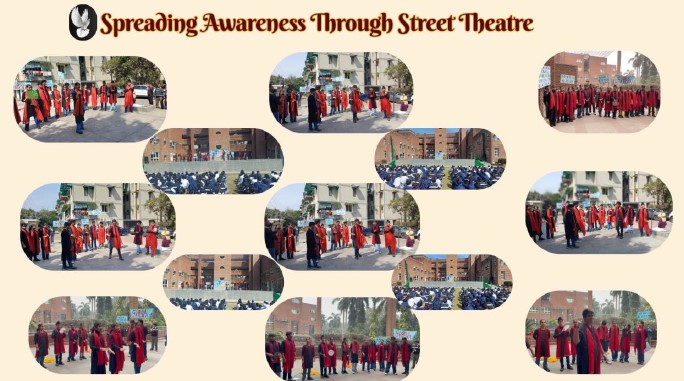
Activity: Street Play for Community Awareness
The programme concluded with an impactful street play performed during the school assembly and in Hans Vihar Society. Through expressive dialogue, dramatic storytelling, and engaging performances, students highlighted the importance of disaster preparedness, peace-building, and global cooperation. The play effectively conveyed important safety messages to both their peers and members of the local community, demonstrating how creative expression can be a powerful tool for spreading awareness.
The performance not only captivated the audience but also encouraged reflection on the role individuals and communities play during emergencies. By participating in the street play, students developed confidence, teamwork, and communication skills. The experience reinforced the idea that young people can actively contribute to promoting safety, empathy, and responsible citizenship within society.
Dialogue between cultures builds bridges of understanding.
Classes VII &VIII
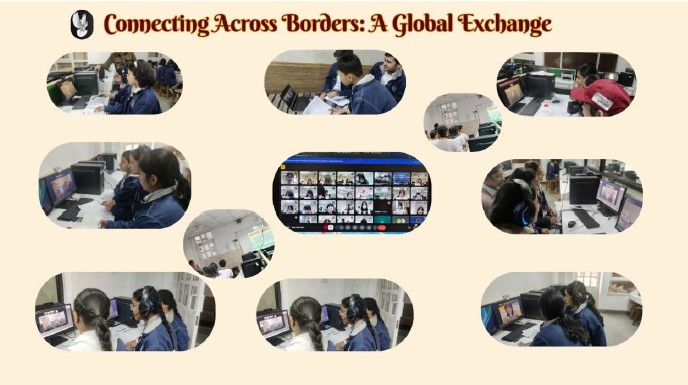
Activity: International Video Conference with Partner Schools
Students of the secondary wing participated in a meaningful virtual cultural exchange with Seodang Elementary School, South Korea, and Takefu Higashi High School, Japan, creating an engaging platform for global interaction and collaboration. During the international video conference, students shared insights about the activities they had undertaken as part of the Civil Defence initiative and discussed the role young people can play in spreading awareness about disaster preparedness and community safety.
Through this interactive session, Class VIII students explored aspects of Korean and Japanese traditions while also presenting elements of their own cultural heritage. The exchange encouraged students to share ideas, experiences, and perspectives on how different countries prepare for emergencies and build resilience within their communities. Listening to one another’s approaches helped them understand that disaster preparedness and community safety are shared global responsibilities.
The interaction fostered empathy, confidence, and effective communication skills, while also strengthening students’ sense of global citizenship. By connecting with peers from different countries, students developed a deeper appreciation for cultural diversity and international cooperation. The initiative also reinforced SDG-driven values, inspiring students to become socially responsible and internationally conscious individuals who recognise the importance of collaboration in building a safer and more connected world.